
TL;DR
Riprap is one of the most effective ways to protect a shoreline from erosion in Southwest Florida. Large natural stones absorb wave energy, stabilize soil, and prevent land loss over time. Riprap is often more cost effective than a seawall and works well in many residential settings, but it does have limitations. Knowing when riprap makes sense, when it needs repair, and when it is time to upgrade to a seawall helps homeowners protect their waterfront investment long term.
Introduction
Shoreline erosion rarely happens all at once. It usually starts small. Maybe you notice the grass line creeping closer to the water. Maybe a storm washes out a few inches of soil. Maybe the edge just looks softer than it used to.
At first, it doesn’t feel urgent. Then one season turns into another, and suddenly you’re losing usable yard space. Landscaping starts leaning toward the water. The shoreline that looked solid a few years ago now feels vulnerable.
We see this all the time across Southwest Florida. Between boat wake, seasonal storms, tidal movement, and natural sediment shifts, waterfront properties are constantly changing. Some areas are more stable than others, but almost every shoreline will eventually need some form of protection.
Riprap is one of the most practical solutions available. It’s simple, durable, and when installed correctly, extremely effective. But like any shoreline protection system, it’s important to understand when it makes sense, when it needs maintenance, and when it may no longer be enough.
What Is Riprap?
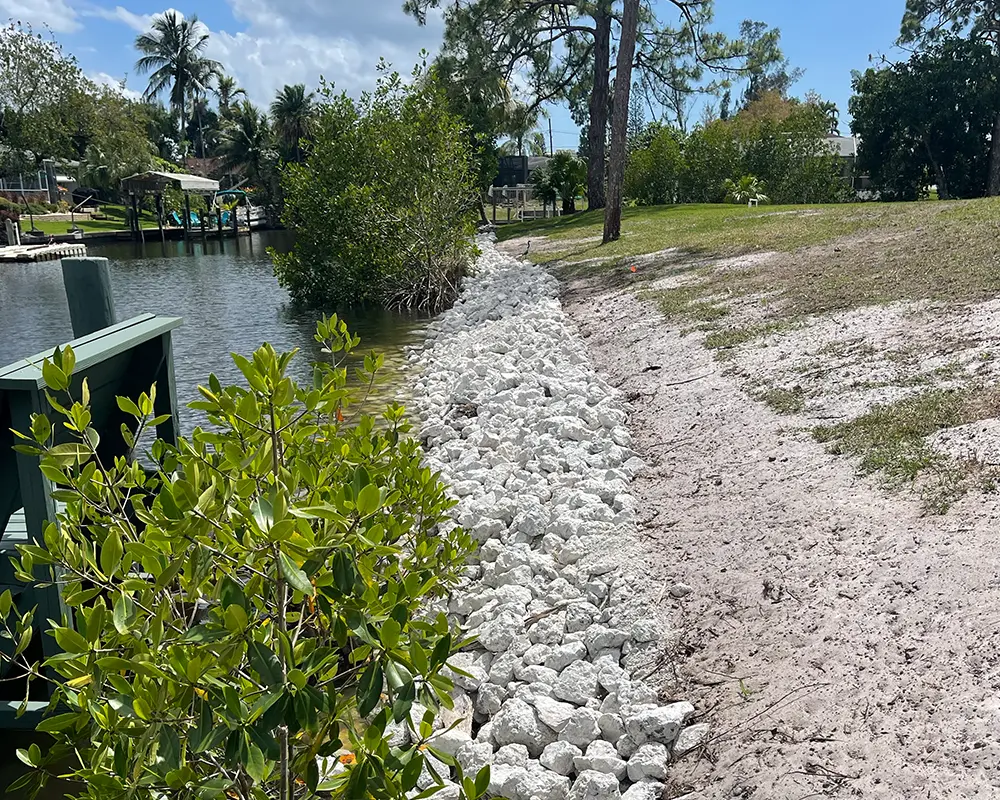
Riprap is a shoreline protection system made up of large natural stones placed along the water’s edge to prevent erosion. Instead of water directly hitting exposed soil, waves break against the rocks, which absorb and dissipate the energy before it reaches the shoreline.
This is an important distinction. A seawall blocks water. Riprap absorbs it.
That difference makes riprap particularly effective in areas where wave energy is moderate and consistent. The rocks create a buffer that slows water movement and reduces the force that normally washes soil away.
Proper riprap installation involves more than just placing rocks along the shoreline. The slope, stone size, base preparation, and placement all matter. When installed correctly, riprap creates a stable shoreline that can withstand seasonal changes and storm events much more effectively than exposed soil.
Over time, riprap often becomes even more stable. Sediment settles between the stones, vegetation may begin to grow, and the shoreline naturally reinforces itself. This is one of the reasons riprap is commonly used along canals, lakes, retention ponds, and waterfront residential properties throughout Southwest Florida.
How Riprap Protects Your Property
Water is constantly moving. Even on calm days, there’s subtle motion along the shoreline. Add boat traffic, seasonal storms, and tidal fluctuations, and that movement increases significantly.
Without protection, that movement gradually removes soil. It may not be noticeable day to day, but over months and years, the shoreline begins to recede.
Riprap slows this process by absorbing the energy before it reaches the soil. Instead of water directly washing away dirt and sand, it flows through the rocks and loses strength in the process.
This helps protect:
- Landscaping near the shoreline
- Dock structures
- Yard space
- Foundations near the water
- Seawalls behind riprap
In many cases, riprap becomes the first line of defense that prevents much larger and more expensive shoreline issues later.
When Riprap Makes More Sense Than a Seawall
Seawalls are often seen as the ultimate shoreline solution, but they are not always necessary. In many situations, riprap is the more practical and cost effective choice.
Riprap tends to work well when the shoreline has a gradual slope and there is room to place stone along the water’s edge. It also performs well in canals, lakes, and waterways where wave action is present but not extreme.
Many homeowners choose riprap because it blends more naturally into the environment. Instead of a vertical wall, the shoreline maintains a softer, more natural appearance. This can be especially appealing in residential settings where aesthetics matter just as much as function.
Another major advantage is cost. Installing riprap is often significantly less expensive than building a full seawall. For homeowners looking to stabilize a shoreline without committing to a major structural installation, riprap can be a very smart option.
The Limitations of Riprap
While riprap is effective, it is not the right solution for every shoreline. Like any protection system, it has limitations.
Riprap requires space. Because it is installed on a slope, it extends into the yard more than a vertical seawall would. For properties where usable yard space is limited, this can become a consideration.
Riprap can also shift over time, especially after strong storms or in areas with heavy boat traffic. Large stones are stable, but movement is still possible depending on conditions.
Maintenance is usually minimal, but it is not zero. Over time, stones may need to be repositioned or additional material added to maintain proper coverage.
These limitations do not mean riprap is ineffective. They simply mean it is important to evaluate whether it is the right long term solution for your property.
Signs Your Riprap Needs Repair
Riprap problems usually develop gradually, which makes periodic inspection important. You don’t need to check it constantly, but it’s smart to take a look after major storms or at least once or twice per year.
Things to watch for include stones that have shifted down toward the water, visible gaps forming between rocks, or areas where soil is beginning to show behind the riprap. These are early indicators that the protection system may need attention.
You may also notice continued erosion in certain areas despite the riprap being in place. This often indicates that additional stone or repositioning is needed.
Catching these issues early makes repairs straightforward. Waiting too long can lead to larger erosion problems that require more extensive work.
When It May Be Time to Upgrade to a Seawall
Riprap works well in many situations, but there are times when upgrading to a seawall makes more sense.
If you are losing valuable yard space and want to reclaim it, a seawall provides a vertical shoreline that maximizes usable land. This is one of the most common reasons homeowners choose to upgrade.
Increasing wave activity is another factor. If boat traffic increases or shoreline conditions change, riprap may eventually struggle to keep up with erosion.
If you are planning to install a dock or other waterfront structure, a seawall may provide stronger long term support.
Sometimes the decision comes down to long term goals. If you want a more defined shoreline or are planning additional waterfront improvements, upgrading to a seawall may be the best move. For more information on hiring a seawall contractor, read our dedicated post here.
Combining Ripraps and Seawalls
In some situations, the best solution is not choosing one over the other, but combining both.
We often install riprap in front of seawalls to reduce wave impact and extend the life of the structure. This added layer of protection helps absorb energy before it reaches the wall.
This hybrid approach can be especially effective in areas with moderate to heavy water movement.
Why Professional Installation Matters
Riprap installation may seem straightforward, but proper design and placement make a significant difference in performance and longevity.
We evaluate shoreline slope, water movement, soil conditions, and stone sizing before installation. These factors determine how well the riprap will perform over time.
Improper installation often leads to shifting stones, continued erosion, and unnecessary repairs. Doing it correctly the first time saves time and money long term.
When to Contact Overall Outdoor & Marine Services
If you are noticing shoreline erosion, shifting riprap, or simply want to evaluate your waterfront, it may be time for a professional assessment.
At Overall Outdoor & Marine Services, we handle:
- Riprap installation
- Riprap repair
- Riprap replacement
- Seawall upgrades
- Shoreline stabilization
- Dredging and sediment management
Every shoreline is different. We take the time to evaluate conditions and recommend the best long term solution for your property.
FAQ: Riprap
Properly installed riprap can last many years with minimal maintenance, though periodic inspection is recommended.
In many cases, yes. Riprap is often more cost effective depending on site conditions.
Yes. Stones can be repositioned or additional material added as needed.
If erosion continues, yard space is limited, or you are planning additional waterfront structures, a seawall may be the better option.
Yes. Riprap helps absorb wave energy and reduce shoreline damage during storm events.
If your shoreline is changing, it is best to address it early. Contact Overall Outdoor & Marine Services to evaluate your property and determine whether riprap repair, installation, or a seawall upgrade is the right solution.