
TL;DR
For many Southwest Florida snowbirds, spring is not just the end of season. It is the last opportunity to prepare a waterfront property before months of heat, storms, humidity, and hurricane season arrive. Proper dock and boat lift preparation can prevent expensive repairs, storm damage, and frustrating surprises when you return in the fall. From securing loose items and inspecting lift cables to pulling boats onto trailers and addressing sediment buildup, a little preparation now goes a long way later.
Introduction
There’s a certain week every spring in Southwest Florida where you can feel the shift happen.
The roads thin out a little. Restaurants get quieter. More boats disappear from canals and lifts. Snowbirds start heading north while the locals brace for what’s coming next. Heat. Rain. Afternoon storms. Hurricane season.
And if you own a waterfront property, summer does not stop affecting your dock just because you’re no longer here to look at it.
We see this every year. Homeowners leave in April feeling confident everything is fine because nothing looks wrong at the moment. Then six months of salt, humidity, UV exposure, tidal changes, and storms slowly work on the property while nobody is around to notice small problems becoming larger ones.
By the time they return, the lift sounds different. A cable is frayed. The dock box is gone. Sediment has built up under the cradle. Maybe the boat still floats, maybe it doesn’t.
The frustrating part is that most of it could have been prevented.
Spring preparation is one of the smartest things a waterfront homeowner can do before leaving Southwest Florida for the summer. And it doesn’t require rebuilding your dock or spending a fortune. It just requires paying attention to the things that commonly get overlooked.
Start by Looking at the Dock Like We Would
Most homeowners walk their dock casually. Contractors inspect it differently.
Before leaving for the summer, slow down and actually study the structure. Walk every section of decking. Feel for movement under your feet. Look at connections, fasteners, pilings, rails, and lift hardware.
The goal is not to find catastrophic damage. The goal is to catch the smaller issues that become bigger problems after sitting through six months of Florida weather.
A slightly loose deck board today becomes warped after a summer of storms. Corrosion around a bracket spreads. A handrail that wiggles a little in April may not feel so solid by September.
Waterfront structures never stop aging in this environment. The sun alone is relentless. Add salt air, humidity, and tropical weather systems, and even well-built docks require attention.
One thing we tell homeowners often is this: your dock usually gives you warning signs before major problems happen. You just have to notice them early enough. For more information on how to maintain your dock in Southwest Florida, read our dedicated blog post here.
Boat Lift Problems Rarely Happen Overnight
Boat lifts are one of the most overlooked pieces of waterfront maintenance in Southwest Florida.
People use them constantly during season, then assume they can sit untouched all summer without issue. Meanwhile the entire system remains under load in one of the harshest environments possible.
Saltwater attacks cables and moving parts constantly. Heat stresses motors. Moisture works its way into electrical systems. Bearings and pulleys wear gradually over time.
The dangerous part is that lifts often continue working while these problems are developing. Homeowners assume everything is fine because the cradle still goes up and down. Then eventually a cable snaps or a motor fails and suddenly the repair becomes much more expensive.
That’s why spring maintenance matters.
At Overall Outdoor & Marine Services, we offer boat lift maintenance services specifically because these systems need regular inspection and care. Proper maintenance includes greasing moving components, checking cable wear, inspecting pulleys and bushings, verifying alignment, and making sure the lift is operating smoothly before summer storms arrive.
It’s far better to identify a worn component now than deal with an emergency repair later while you’re hundreds of miles away.
One of the Biggest Mistakes Snowbirds Make
A surprising number of homeowners leave loose items sitting around the dock all summer.
Chairs. Dock carts. Coolers. Fishing equipment. Cleaning supplies. Decorative items. Loose hoses.
Then the first major storm rolls through and suddenly those items are moving across the property or into the water.
Southwest Florida storms do not need to be hurricanes to cause damage. Strong afternoon winds alone can move unsecured items around a dock. Once hurricane season ramps up, anything left loose becomes a liability.
Before leaving for the summer, assume the property will eventually experience severe weather. Because statistically, it probably will.
Secure or remove anything that could become airborne. Store loose equipment properly. Tie down what needs to stay outside. Dock boxes should be latched securely. Furniture should either be stored or properly anchored.
A lot of expensive damage starts with something small becoming a projectile.
Pulling the Boat Out of the Water Is Often the Smartest Move
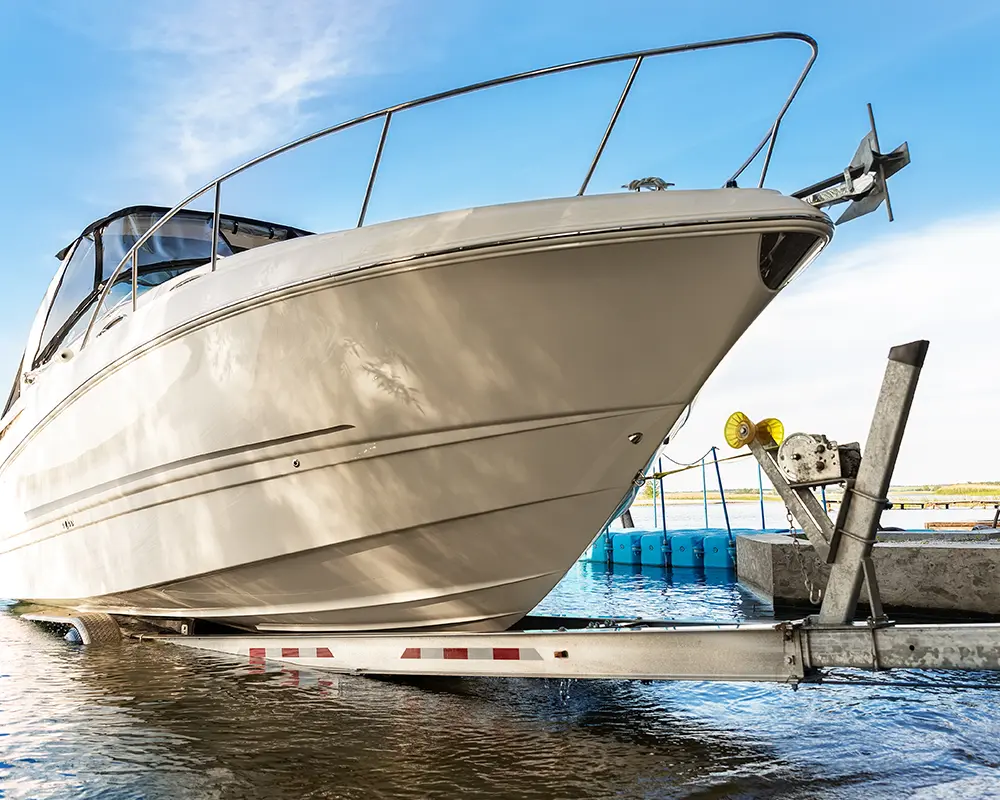
Not every homeowner wants to hear this, but if you are leaving for months at a time, pulling the boat onto a trailer is often the best decision.
Boats sitting unattended in Southwest Florida summers take a beating. Constant UV exposure destroys upholstery and finishes. Humidity accelerates mildew growth. Heavy rain creates drainage issues. Storm surge becomes a concern. Electrical systems sit unused in extreme heat.
Even boats sitting on lifts are still exposed to all of it.
For many seasonal homeowners, trailering the boat and properly wrapping or covering it provides significantly better protection over the summer months. It removes stress from the lift, reduces weather exposure, and minimizes the chance of coming back to unexpected issues.
We understand not every property or owner situation allows for this. But when possible, it is absolutely worth considering.
Especially if the boat will sit untouched for several months.
Sediment Buildup Gets Ignored Until It Becomes a Problem
One of the most common things we hear from homeowners returning in the fall is:
“My boat didn’t used to struggle like this.”
Sediment buildup happens slowly. That’s what makes it deceptive.
The canal itself may still look fine, but under the lift cradle things change over time. Sand, mud, and debris settle gradually until eventually there’s less clearance than there used to be.
Then low tide arrives and suddenly the boat struggles to float properly off the lift.
This is especially common during the summer because tidal movement and storms constantly shift sediment around waterfront properties.
Before leaving for the season, it’s smart to evaluate water depth around the lift. If things already seem shallow in spring, they are probably not going to improve over the summer.
Catching this early allows you to address dredging before it becomes a bigger issue later.
Electrical Problems Love Florida Summers
Waterfront electrical systems live in brutal conditions.
Heat. Moisture. Salt. Rain. Constant exposure.
If your dock has lighting, outlets, or lift motors, spring is the right time to inspect them. Look for corrosion around boxes and connections. Test GFCIs. Make sure everything is functioning properly before leaving the property unattended.
Electrical issues near water are not something to gamble with. Small problems can turn into major safety concerns surprisingly quickly.
Hurricane Preparation Is Really About Reducing Risk
No dock is hurricane proof. No lift is hurricane proof. That’s just reality in Florida.
But there is a major difference between a property that was prepared properly and one that was ignored.
The goal is not perfection. The goal is reducing risk.
Securing loose items, addressing weak points, checking hardware, maintaining lifts, and properly preparing boats dramatically lowers the chances of serious damage during storm season.
We’ve seen properties come through storms with minimal issues simply because the homeowner took preparation seriously before leaving for the summer.
We’ve also seen the opposite.
Usually the difference comes down to maintenance and preparation.
The Small Things That Become Expensive Later
Most waterfront failures don’t start as catastrophic problems.
They start small.
A cable beginning to fray. Corrosion around a motor bracket. A slightly loose piling connection. Sediment building gradually under the cradle. A dock board holding moisture longer than it should.
Individually, none of these feel urgent. But Florida summers are hard on waterfront structures. Minor issues sitting unattended for months tend to get worse, not better.
That’s why proactive maintenance matters so much for seasonal residents.
Why Spring Is the Best Time to Handle Repairs
By the middle of summer, contractors throughout Southwest Florida are flooded with storm-related work, emergency calls, and urgent repairs.
Spring gives homeowners the opportunity to prepare before schedules tighten and weather becomes more aggressive.
It’s easier to address maintenance proactively than reactively. It’s usually less expensive too.
And frankly, leaving the state knowing your waterfront property has been inspected properly gives most homeowners peace of mind they don’t realize they needed.
Work With a Contractor Who Understands Waterfront Properties
Waterfront maintenance is its own category of work. Docks, lifts, pilings, and shoreline systems behave differently than standard residential structures.
At Overall Outdoor & Marine Services, we work on these systems every day throughout Southwest Florida. We understand how summer weather affects waterfront properties because we see it constantly.
Whether you need boat lift maintenance, dock repairs, dredging, or simply want an experienced set of eyes on the property before leaving for the season, we’re here to help.
Sometimes catching a problem early is the difference between a simple repair and a major rebuild later.
FAQ: Preparing Your Dock for Summer
At minimum, boat lifts should be professionally inspected and serviced annually, especially in saltwater environments like Southwest Florida.
If you are leaving for an extended period, pulling the boat onto a trailer and protecting it with a wrap or cover often provides better long term protection.
Lift cable wear, sediment buildup under the lift, loose hardware, and unsecured dock items are all commonly overlooked.
Tides, storms, boat traffic, and natural water movement slowly shift mud and sand into lift areas over time.
Furniture, hoses, dock boxes, cleaning equipment, fishing gear, and any loose items around the dock should either be secured or removed.
Yes. Overall Outdoor & Marine Services offers boat lift maintenance services including inspections, greasing, and evaluation of moving components.
Before heading north for the summer, take the time to prepare your dock and lift properly. A little maintenance now can save a major headache later.
If you’d like help inspecting, servicing, repairing, or preparing your waterfront property, contact Overall Outdoor & Marine Services today.