
TL;DR
Residential and commercial landscaping may use similar materials, but they serve very different purposes. Residential projects focus on lifestyle, privacy, and personal use. Commercial projects prioritize durability, compliance, and long-term efficiency. Understanding the difference helps property owners avoid costly mistakes and build landscapes that perform well for years.
Introduction
Landscaping in Southwest Florida isn’t just about planting palms and laying sod. The climate is demanding. The soil can shift. Stormwater has to go somewhere. And the sun is relentless.
We’ve designed and installed landscapes for private waterfront homes, gated communities, retail centers, office properties, and everything in between. One thing becomes very clear after working in both environments for years: residential and commercial landscaping may look similar at first glance, but the goals behind them are completely different.
When you understand those differences, you make better decisions. You invest smarter. And you avoid the kind of problems that only show up two years after installation.
Let’s walk through what separates residential from commercial landscaping in Southwest Florida, what trends we’re seeing in both, and what property owners should pay attention to before breaking ground.
The Purpose Drives Everything
The biggest difference between residential and commercial landscaping is not size. It’s purpose.
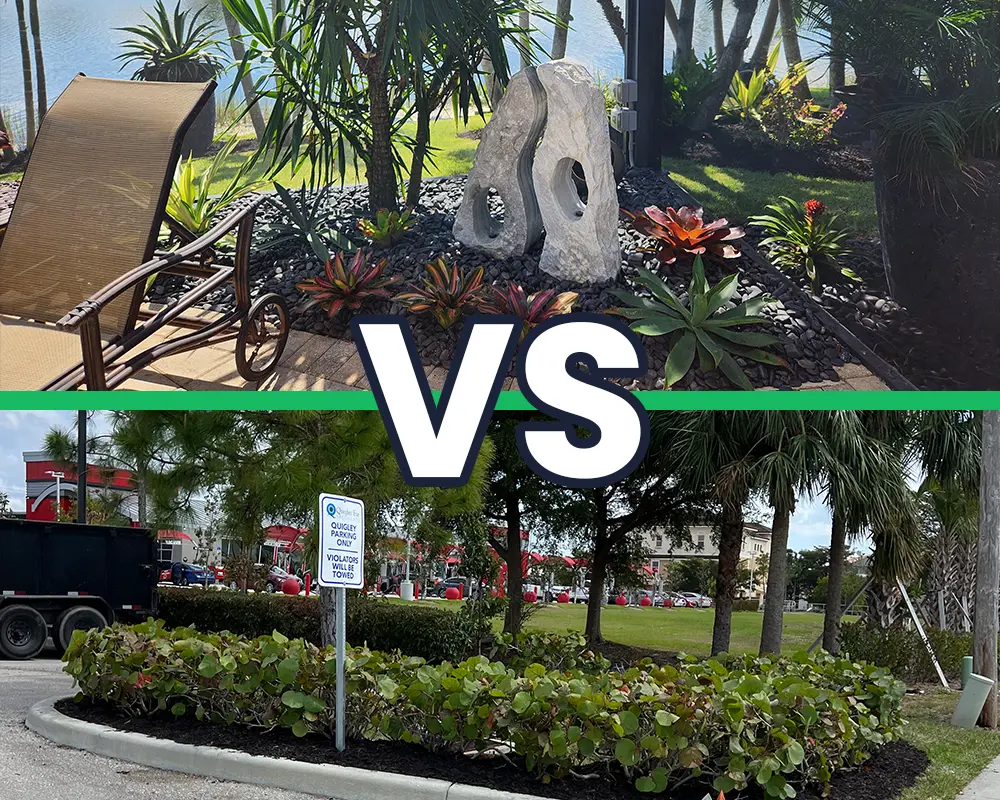
Residential landscaping is personal. It supports how someone lives at home. It’s about privacy from neighbors, shade by the pool, safe spaces for kids, curb appeal, and long evenings outside. Every choice is tied to how the homeowner actually uses the space.
Commercial landscaping serves a different role. It represents a brand. It guides foot traffic. It protects infrastructure. It must withstand constant use without looking worn out. It has to meet municipal codes, HOA guidelines, and maintenance budgets.
That difference changes everything from plant selection to grading strategy.
How Design Priorities Shift
Residential Landscaping Priorities
When we design for a homeowner, the first conversation is usually about lifestyle.
Where do you spend time outside?
Do you entertain often?
Do you want privacy or open views?
How much maintenance are you realistically willing to handle?
In Southwest Florida, residential landscapes are increasingly focused on:
- Functional outdoor living spaces
- Native or drought-tolerant plants
- Shade planning for hot seasons
- Smart irrigation systems
- Privacy without feeling boxed in
Homeowners want their yard to feel intentional. They also want it to survive hurricane season without looking destroyed afterward.
The key is designing for mature growth, not just day-one aesthetics. Overplanting is one of the most common mistakes we see. It looks lush at install, then becomes overcrowded and unhealthy within two years.
Commercial Landscaping Priorities
Commercial projects are less emotional and more operational.
We have to think about pedestrian traffic, visibility from the road, irrigation efficiency, and long-term maintenance budgets. A commercial property owner cannot afford to replace plants every season because the initial design was too delicate.
Plant selections lean toward durability. Bed lines are cleaner. Variety is often limited intentionally to simplify maintenance. Drainage planning is more complex because commercial sites tend to have larger impervious surfaces like parking lots and sidewalks.
Stormwater management is especially critical in Southwest Florida. Grading and retention planning must be precise. Poor drainage on a commercial site is not just an inconvenience. It becomes a liability.
Drainage and Site Preparation Matter More Most People Realize
Regardless of whether a project is residential or commercial, the success of the landscape depends on what happens before a single plant goes into the ground.
Improper grading causes standing water. Standing water leads to root rot, erosion, and foundation issues. Poor soil preparation leads to settling and plant instability. In commercial settings, that can damage pavement and walkways. In residential settings, it can undermine patios or pool decks.
We approach both project types with the same discipline when it comes to site preparation. Clean fill, proper compaction, intentional slopes, and coordinated irrigation planning are not optional. They are foundational. For more information on the importance of good sitework, read our dedicated post here.
Trends in Residential Landscaping Right Now
Residential clients in Southwest Florida are leaning heavily toward sustainability and functionality.
Native plants are increasingly popular because they reduce water usage and handle storms better. Homeowners are more conscious of irrigation efficiency and long-term costs. Foodscaping is becoming more common as well, with citrus trees, raised beds, and herb gardens integrated into landscape design.
Another trend we see often is layering for privacy. Instead of a single hedge line, we use multiple plant heights to create depth while maintaining airflow. That matters in a humid climate.
Outdoor living spaces continue to expand. Landscapes are now designed around outdoor kitchens, fire features, and seating areas. The planting plan must complement those structures rather than compete with them.
Trends in Commercial Landscaping
Commercial landscapes are trending toward simplicity and performance.
Clients want clean lines and structured plantings that project professionalism. Durability is prioritized over novelty. Maintenance costs are evaluated before installation even begins.
Water management is a major focus. Bioswales, retention areas, and integrated drainage systems are more common because regulations require them and long-term performance depends on them.
Lighting design is also evolving. Commercial sites are using landscape lighting strategically for safety while enhancing nighttime visibility without overwhelming the property.
Common Pitfalls in Residential Projects
One of the biggest mistakes homeowners make is prioritizing appearance over infrastructure. If irrigation and drainage are not handled correctly, even the most beautiful plant palette will struggle.
Another common issue is underestimating maintenance. Choosing high-maintenance species without committing to regular care leads to frustration.
Planning for mature size is critical. Plants that look small and manageable at installation can overwhelm walkways and windows within a few seasons.
Common Pitfalls in Commercial Projects
On commercial properties, speed can become the enemy of quality. Rushed grading or incomplete soil preparation creates long-term problems that are expensive to fix.
Selecting ornamental species that cannot tolerate high traffic or inconsistent watering is another frequent issue. Commercial landscapes must be resilient.
Coordination is also critical. Utilities, lighting, drainage, and landscape design must work together. When they are treated separately, conflicts arise later.
How We Approach Both With the Same Level of Care
Whether we are working on a private waterfront residence or a multi-building commercial site, our process does not change in terms of attention to detail.
We evaluate drainage first. We consider soil conditions. We coordinate irrigation with plant selection. We design for longevity, not just installation day.
Residential clients deserve a yard that enhances daily life. Commercial clients deserve a landscape that protects their investment and reinforces their brand.
Project size does not determine effort. Execution does.
Choosing the Right Fit for Your Project
If you are a homeowner planning a landscape renovation, focus on how you use the space and be honest about maintenance expectations. Choose a contractor who understands Southwest Florida conditions and designs accordingly.
If you are managing a commercial property, prioritize durability, compliance, and long-term efficiency. The lowest upfront bid is rarely the lowest long-term cost.
Landscaping is not decoration. It is infrastructure with living components.
FAQ: Residential Vs. Commercial Landscaping
Residential landscaping focuses on personal lifestyle and comfort. Commercial landscaping prioritizes durability, compliance, and operational efficiency.
Yes. Native species can work well in residential and commercial settings when selected appropriately.
Heavy rain events and flat terrain require intentional grading to prevent water accumulation and structural issues.
Yes. Commercial sites require predictable maintenance schedules and durable plant selections to control costs.
Yes, as long as they understand the different goals and technical demands of each type of project.