
TL;DR
Dock maintenance in Southwest Florida is not optional. Salt, sun, storms, and shifting sediment will wear down even the best-built dock if it is ignored. Regular cleaning, checking decking and pilings, inspecting boat lift components, securing loose items, and watching for sediment buildup can prevent expensive repairs. Certain issues like damaged pilings, worn lift cables, structural movement, or dredging needs require professional attention. If you notice warning signs, it is time to call Overall Outdoor & Marine Services before a small problem becomes a major one.
Introduction
Southwest Florida is one of the best places in the country to own a waterfront property. It is also one of the hardest environments on a dock.
Salt air corrodes metal. Sun bakes decking. Storms test every fastener. Sediment slowly creeps back in under your lift. You may not notice it day to day. Then one morning your boat will not float at low tide and you are left wondering how it happened.
Here is the truth. Docks do not fail overnight. They deteriorate slowly. Quietly. Predictably.
If you stay ahead of it, maintenance is simple and manageable. If you ignore it, repairs get expensive fast.
Let’s walk through how to properly maintain your dock in Southwest Florida, what you can handle yourself, what requires a professional, and how to spot dredging issues before they disrupt your season.
Start With Regular Cleaning
This is the simplest maintenance step and the one most people overlook.
Salt and organic debris build up quickly. Algae grows fast in humid conditions. Mold stains set in when decks stay damp.
A basic cleaning schedule goes a long way.
At minimum, you should:
- Rinse your dock with fresh water regularly to reduce salt accumulation
- Remove leaves and organic debris that trap moisture
- Use a soft wash method instead of aggressive pressure washing
High-pressure washing may seem like a good idea, but it can damage wood fibers and composite surfaces if done improperly. A controlled soft wash is safer and more effective.
Keeping the surface clean does more than improve appearance. It reduces slip hazards and extends the life of your decking material.
Inspect Your Decking and Fasteners
Walk your dock slowly. Look down. Look closely.
Check for:
- Loose boards
- Soft spots in wood
- Warped decking
- Exposed fasteners
- Rust staining around hardware
If you feel movement under your feet, that is not something to ignore.
In Southwest Florida, constant expansion and contraction from heat and moisture puts stress on fasteners. Over time, screws loosen. Nails back out. Connections weaken.
Catching a loose board early is a minor fix. Ignoring it leads to structural compromise.
If you notice significant movement in framing members or sagging sections, that is when you call a professional. Structural repairs are not DIY territory.
Pay Close Attention to Pilings
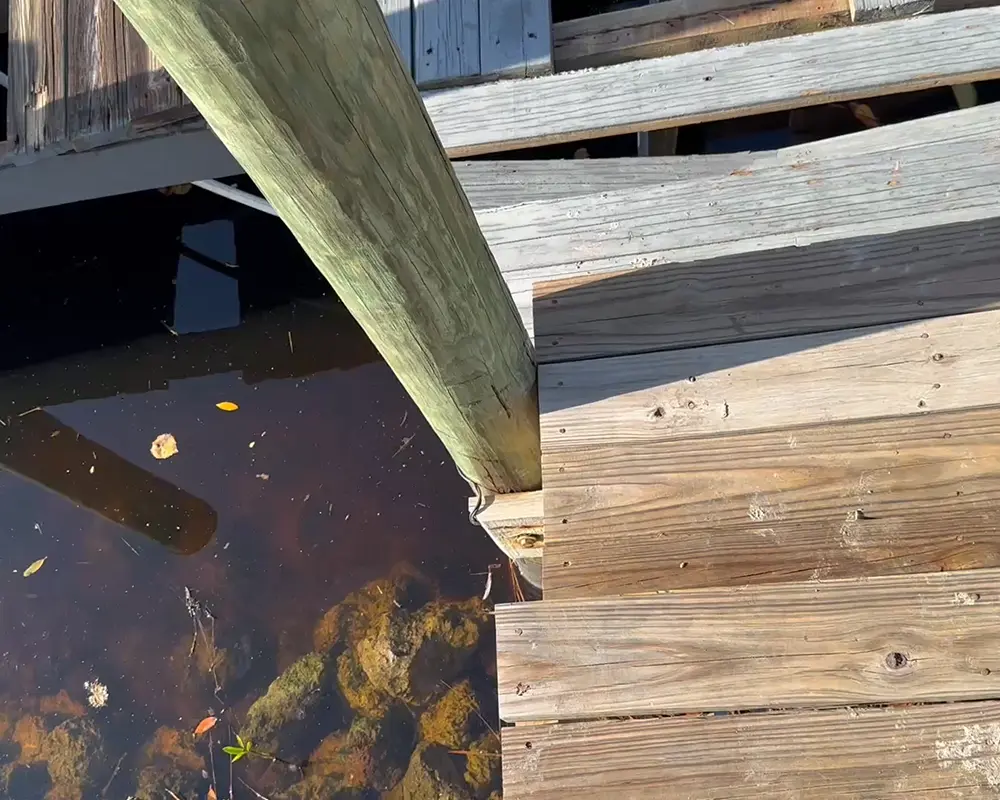
Pilings are the backbone of your dock. If they fail, everything fails.
Look at the waterline first. That is where damage typically starts. Marine borers, rot, and constant water exposure take their toll right at that transition zone.
You should look for:
- Cracking
- Splitting
- Soft areas when tapped
- Visible erosion
- Excessive leaning
A slight natural lean can happen over time, but noticeable shifting should be evaluated.
If a piling is compromised, do not wait. Replacing pilings requires proper equipment and experience. This is one of those areas where a professional repair is not optional.
Boat Lift Maintenance Is Critical
Your boat lift works hard. It holds thousands of pounds over saltwater year-round. It deserves attention.
You should regularly inspect:
- Lift cables for fraying
- Pulleys for corrosion
- Cradle alignment
- Motor housing condition
- Electrical connections
Lift cables are especially important. If you see rust, broken strands, or uneven tension, it is time to have them replaced. A failed cable can drop a boat unexpectedly.
Listen to your lift. If it sounds strained, uneven, or jerky, something is off. Smooth operation is the goal.
Boat lift cable replacement, motor repair, and electrical diagnostics are jobs for experienced technicians. The cost of proper maintenance is far less than repairing a dropped boat.
Secure Loose Items Before They Become Problems
Southwest Florida weather changes quickly. Afternoon storms roll in fast. Winter cold fronts can push tides down and winds up.
Loose items on a dock become projectiles.
You should secure:
- Dock furniture
- Cleaning tools
- Loose boards
- Unsecured storage items
Better yet, invest in waterproof dock storage boxes. They protect gear from moisture and eliminate clutter that could cause accidents.
Keeping your dock organized is not just about appearance. It is about safety and storm readiness.
Accessories That Help Protect Your Dock
Certain upgrades can reduce long-term wear.
A dock roof or pergola provides shade and UV protection. Direct sun accelerates decking deterioration and stresses boat lift components. Adding overhead coverage extends the life of both.
Waterproof storage containers keep tools and life jackets dry while preventing water intrusion damage.
Proper dock lighting improves visibility, which reduces accidental impacts and foot traffic mistakes that cause wear.
These are not just aesthetic upgrades. They reduce stress on the dock system over time.
Watch for Signs You May Need Dredging
Sediment buildup is common in Southwest Florida. Currents shift. Storms move sand. Tidal patterns change.
You might need dredging if you notice:
- Your boat sits lower at the lift than it used to
- You struggle to float at low tide
- Sand or debris visibly accumulating near pilings
- Increased prop wash stirring up mud immediately under the dock
Another sign is if your lift cradle needs to sit lower than before just to clear the hull. That often indicates sediment buildup below.
Dredging is not about making the canal deeper. It is about restoring the proper depth directly under and around your dock footprint.
If you suspect sediment buildup, do not ignore it. Waiting often leads to lift strain, hull damage, or being stuck during low tide.
Know When to Call a Professional
There is a difference between maintenance and repair.
Call a professional if you see:
- Damaged or leaning pilings
- Structural sagging
- Severely corroded lift components
- Frayed or worn lift cables
- Electrical issues with lift motors
- Major decking deterioration
- Noticeable sediment buildup affecting boat access
Trying to patch structural issues temporarily often makes them worse. For more information on repairing or replacing your dock, read our dedicated post here.
Seasonal Maintenance Checklist
Southwest Florida has distinct maintenance windows.
Before hurricane season:
- Secure loose items
- Inspect hardware
- Check lift cables
- Remove debris
After major storms:
- Inspect pilings
- Check for shifted boards
- Look for new sediment buildup
- Verify lift alignment
During winter cold fronts:
- Watch for unusually low tides
- Monitor lift cradle clearance
A few hours of inspection each season prevents costly surprises. For more information on protecting your dock during hurricane season, read our dedicated post here.
Why Consistent Maintenance Pays Off
Dock repairs are rarely cheap when delayed. Replacing pilings, rebuilding framing, or repairing lift damage costs significantly more than routine inspections and minor fixes.
Waterfront properties are major investments. Your dock protects that investment and supports your lifestyle.
Treat it like critical infrastructure, because it is.
When It Is Time to Bring in OMS
If you notice structural issues, lift concerns, or dredging needs, that is where we step in.
At Overall Outdoor & Marine Services, we handle:
- Dock repairs
- Piling replacement
- Lift cable replacement
- Lift diagnostics
- Structural reinforcement
- Suction dredging
- Sediment removal
We evaluate the problem, explain what is happening, and fix it properly.
Ignoring dock issues does not make them disappear. It just makes them more expensive.
If something looks off, give us a call. It is better to check early than rebuild later.
FAQ: How to Maintain Your Dock
At least quarterly, and always after major storms.
It is strongly recommended to hire a professional. Improper installation can cause serious damage or injury.
Corrosion, sediment buildup, and cable wear are among the most frequent problems.
If your boat struggles to float at low tide or sediment is visibly building up under your dock, it is time for an evaluation.
Yes. It reduces UV exposure and extends the life of decking and lift components.
If there is visible rot, cracking, or structural movement, have them professionally evaluated immediately.