
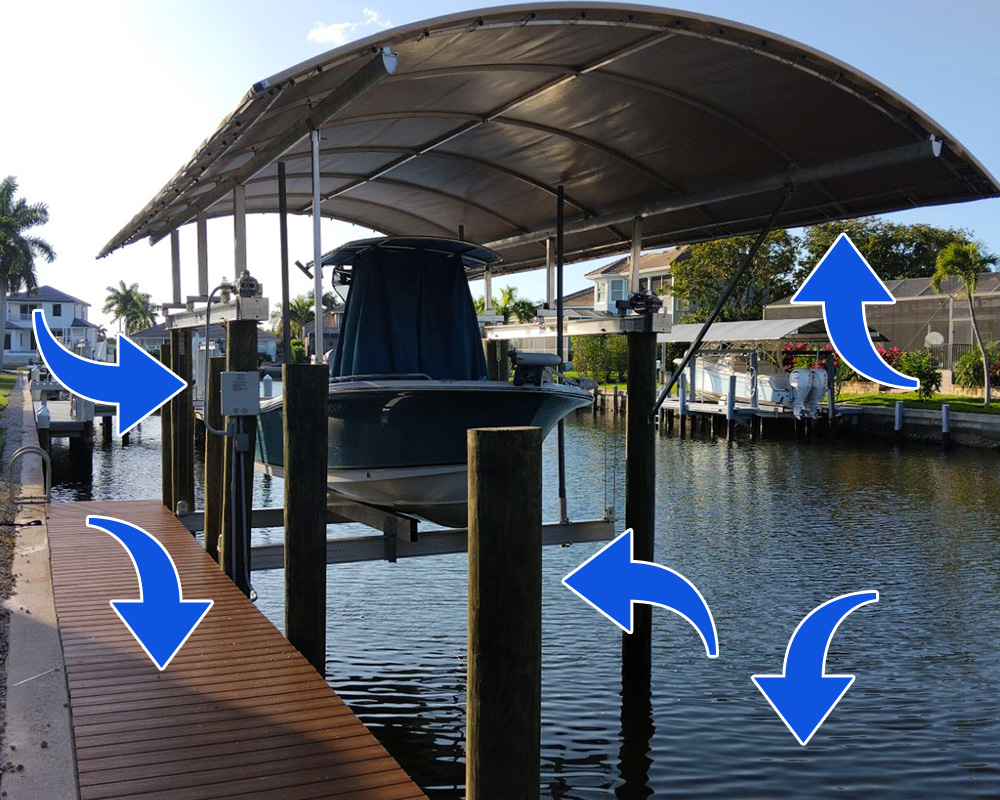
Welcome back to Southwest Florida! As temperatures begin dropping up north, seasonal residents are making their annual return to Naples, Marco Island, Bonita Springs, Fort Myers, and the surrounding coastal communities. For many homeowners, the start of another season means reopening their waterfront properties, getting their boats ready, and looking forward to spending the next several months enjoying everything Southwest Florida’s waterways have to offer. However, before you lower your boat into the water or invite friends over for an afternoon on the dock, it’s important to make sure your waterfront structures are in good working condition.
Southwest Florida’s coastal environment can be particularly demanding on docks and boat lifts, especially during the summer months when seasonal homeowners are away. Saltwater exposure, intense sunlight, heavy rainfall, tidal fluctuations, and tropical storms can all contribute to deterioration. Even a dock that appeared to be in excellent condition when you headed north in the spring may have developed problems over the summer. Without regular inspections, relatively minor maintenance issues can become significant safety concerns or expensive repairs.
At Overall Outdoor & Marine Services, we help waterfront homeowners throughout Southwest Florida maintain, repair, and improve their docks, boat lifts, seawalls, and other marine structures. If you’re returning to your seasonal home, taking the time to inspect your dock before using it can help protect your investment and ensure you’re ready for another enjoyable boating season.
Why Seasonal Dock Maintenance Is Important in Southwest Florida
Unlike many other outdoor structures, docks are continuously exposed to conditions that can accelerate wear and deterioration. Saltwater is particularly corrosive to metal components, while prolonged exposure to sunlight and moisture can affect decking materials, fasteners, and structural supports. Marine organisms can accumulate on submerged structures, and changing tides can gradually influence the stability of certain dock components. When tropical storms or hurricanes pass through the region, strong winds, waves, and storm surge can place additional stress on docks and boat lifts, even when no obvious damage is visible from shore.
These conditions don’t stop affecting your dock simply because you’re away for the summer. In fact, seasonal homeowners may be more likely to overlook developing problems because their waterfront structures aren’t being used or inspected regularly. A loose deck board, corroded boat lift cable, or shifting piling might go unnoticed for months before becoming apparent when the property is reopened.
Conducting a seasonal dock inspection allows homeowners to identify visible signs of damage before returning to regular use. It also provides an opportunity to schedule necessary maintenance, address potential safety hazards, and consider improvements that could make the dock more functional throughout the coming season.
1. Inspect Dock Decking for Loose, Sagging, or Damaged Boards
One of the first areas to examine when returning to your waterfront property is the dock’s decking. Whether your dock is constructed with pressure-treated lumber, composite decking, or marine-grade synthetic materials, its walking surface is constantly exposed to sunlight, moisture, and changing weather conditions. Over time, these environmental factors can contribute to warping, cracking, loosening, and other forms of deterioration.
Begin with a visual inspection from a safe location, looking for boards that appear uneven, sagging, cracked, or separated from their fasteners. Pay particular attention to areas where decking meets the seawall, transitions between dock sections, and locations surrounding boat lift equipment. Discoloration, splintering, soft spots, or visible gaps may indicate that individual boards or their supporting structures require attention. If the dock has experienced a significant storm during your absence, inspect for debris impact and sections that appear to have shifted out of alignment.
Loose or deteriorating decking can create tripping hazards and may indicate more extensive problems beneath the surface. While replacing an individual damaged board may seem straightforward, widespread sagging or movement can suggest deterioration in the joists, framing, or connections supporting the dock. If you notice these conditions, avoid walking on the affected area until a qualified marine contractor has evaluated its structural integrity.
2. Check Metal Fasteners, Bolts, and Hardware for Corrosion
Corrosion is one of the most common maintenance concerns for docks in Southwest Florida, particularly those located along saltwater canals, bays, and coastal waterways. Metal fasteners, bolts, brackets, hinges, and other hardware components are routinely exposed to salt spray and moisture, creating conditions that can accelerate deterioration. Even materials designed for marine environments require periodic inspection, especially after extended periods without maintenance.
Look closely at visible bolts, screws, brackets, and structural connections for signs of rust, discoloration, pitting, or deterioration. Surface staining doesn’t always indicate that a component has lost its structural strength, but advanced corrosion can weaken critical connections and compromise the stability of the dock. Hardware that appears loose, heavily rusted, or partially separated from the structure deserves particular attention.
It’s also important to inspect areas where different metals come into contact, as certain combinations can contribute to galvanic corrosion in marine environments. Replacing deteriorated hardware with appropriately specified marine-grade components can help prevent recurring problems. However, structural fasteners should be evaluated and replaced by qualified professionals who understand the loads involved and the materials required for waterfront construction.
3. Examine Dock Pilings for Movement or Structural Damage
Dock pilings are responsible for supporting and stabilizing the structure, making their condition one of the most important aspects of a seasonal inspection. Depending on the dock’s design, pilings may be constructed from treated timber, concrete, or other marine-grade materials. These supports must withstand changing water levels, currents, vessel movement, and the forces associated with storms and wave activity.
From a safe vantage point, examine the visible pilings for leaning, cracking, unusual movement, or separation from the dock’s framing. Timber pilings should be checked for signs of splitting, deterioration, or damage near the waterline, where exposure to moisture and marine organisms can be particularly demanding. Concrete pilings may develop cracks or visible deterioration, while connections between pilings and the dock structure should remain secure.
A piling that appears to have shifted or tilted may indicate movement below the waterline, damage from vessel impact, or stress caused by severe weather. Because much of a piling’s supporting structure is submerged, visual inspections alone cannot always reveal the full extent of a problem. If you notice unusual movement, misalignment, or structural damage, a professional marine inspection is strongly recommended before resuming normal dock use.
4. Inspect Your Boat Lift Before Operating It
For homeowners who keep their boats on lifts, inspecting the boat lift should be a priority before the first launch of the season. Boat lifts contain numerous mechanical and structural components that can deteriorate during extended periods of inactivity. Cables, pulleys, motors, gearboxes, electrical connections, and mounting hardware all require attention to ensure the system can safely support and move a vessel.
Begin by visually examining the lift cables for broken strands, fraying, kinks, corrosion, or uneven winding. Even a small amount of visible cable damage can be significant because the cables are responsible for supporting substantial weight. Inspect the pulleys and other accessible components for signs of deterioration, and look for evidence of loose hardware or shifting structural supports. The bunks and cradle should also appear properly aligned and free from obvious damage.
Electrical components deserve particular attention in Southwest Florida’s humid, saltwater environment. Corroded connections, damaged wiring, and water intrusion can create serious hazards, particularly around docks where electricity and water are in close proximity. Homeowners should not attempt to open electrical enclosures or troubleshoot potentially damaged wiring themselves.
If the lift hasn’t been operated for several months, consider scheduling a professional inspection before placing a boat on it or running it through a complete lifting cycle. Never stand beneath a suspended boat or lift cradle, and do not operate a lift with visibly damaged cables or structural components. A professional can evaluate the equipment, perform appropriate maintenance, and identify components that may need repair or replacement.
5. Look for Sediment, Marine Growth, and Debris Accumulation
Southwest Florida’s waterways are constantly changing, and several months of seasonal weather can affect the conditions surrounding your dock. Heavy rainfall, tidal movement, storms, and natural sediment transport can contribute to changes in water depth and the accumulation of debris around waterfront structures. Floating vegetation, branches, discarded materials, and other debris may collect beneath docks or around boat lifts, particularly after significant storms.
When returning to your property, visually inspect the water surrounding your dock for unusual debris accumulation, excessive marine growth, or noticeable changes in depth. Pay attention to the area beneath your boat lift, where sediment buildup can reduce clearance and potentially interfere with launching or retrieving your vessel. In shallow canals and waterways, even relatively modest changes in bottom elevation can affect navigation, especially during lower tides.
Marine growth on pilings and submerged components is common, but excessive accumulation can complicate inspections and contribute to maintenance concerns. If you suspect sediment buildup has reduced water depth or interfered with boat lift operation, a professional marine contractor can help determine whether additional evaluation or maintenance is necessary.
Depending on the location and extent of the problem, dredging or other sediment-management work may require permits or regulatory approvals. Homeowners should avoid attempting to excavate or remove significant amounts of submerged material without first determining the applicable requirements.
6. Check Dock Roofing and Covered Structures
Covered docks and boat lift canopies provide valuable protection from Southwest Florida’s intense sunshine and seasonal rainfall, but their roofs and supporting structures are also exposed to severe weather. Strong summer thunderstorms, tropical systems, and prolonged UV exposure can damage roofing materials, loosen connections, and place stress on support posts and framing.
Inspect the roof from a safe location for missing or displaced panels, sagging sections, visible corrosion, and loose hardware. If your dock has a fabric canopy, look for tears, excessive stretching, damaged seams, or areas where the material has separated from its frame. Metal roofing should be examined for signs of corrosion and damaged fasteners, particularly around exposed edges and connections.
Pay attention to the supporting structure as well. Posts, brackets, and framing members should appear properly aligned and securely connected. A roof that has shifted or developed visible sagging may have experienced structural stress during a storm, even if the roofing material itself remains intact.
Because dock roofs are often elevated above the water, homeowners should avoid climbing onto them or attempting repairs without appropriate equipment and professional assistance. Loose roofing components can create hazards during subsequent storms, making timely evaluation particularly important.
7. Inspect Dock Accessories, Lighting, and Electrical Equipment
Dock accessories are easy to overlook during seasonal maintenance, but they play an important role in the safety and convenience of your waterfront property. Cleats, ladders, bumpers, dock boxes, lighting fixtures, and electrical equipment should all be examined before returning to regular use.
Begin by checking dock cleats and other boat-securing hardware for loose connections, corrosion, or visible damage. These components experience substantial forces when vessels are tied to the dock, particularly during windy conditions or changing tides. Dock ladders should be securely attached and free from damaged steps, while bumpers and protective edging should be inspected for deterioration that could leave your boat vulnerable to contact with the dock.
Lighting systems should also be checked for damaged fixtures, exposed wiring, or signs of water intrusion. If your dock includes shore power connections, outlets, or other electrical equipment, look for obvious exterior damage without touching or opening suspect components. Electrical systems near water present serious shock and electric shock drowning hazards, so any questionable equipment should remain unused until inspected by a qualified marine electrician.
Taking the time to inspect these smaller components can help prevent avoidable accidents and ensure your dock is ready for everyday use.
8. Examine Your Seawall and Surrounding Shoreline
Although a seawall is technically separate from the dock itself, its condition can directly affect the safety and stability of your waterfront property. Seawalls help retain soil and protect shorelines from erosion, and deterioration can create problems for nearby landscaping, walkways, and dock access areas.
When reopening your property, inspect the seawall for visible cracks, leaning sections, displaced capstones, or separation between structural components. Look for depressions or sinkholes forming in the soil behind the wall, as these may indicate that material is being washed out through gaps or deteriorated joints. Unusual erosion near the dock entrance or along the shoreline can also suggest developing problems.
Southwest Florida’s seasonal rainfall and fluctuating water levels can place considerable pressure on seawall structures. If deterioration is left unaddressed, repairs may become more extensive as soil loss and structural movement continue. Homeowners who notice cracking, settlement, or significant erosion should arrange for a professional evaluation rather than attempting temporary repairs that may conceal the underlying problem.
What Should You Do If You Discover Dock Damage?
If your seasonal inspection reveals damaged decking, corroded structural hardware, shifting pilings, boat lift problems, or other concerning conditions, the safest approach is to have the affected components evaluated before returning the dock to regular use.
Some maintenance issues may be relatively minor, while others can indicate structural deterioration that isn’t immediately visible. A loose deck board, for example, may simply require replacement, but it could also be a symptom of weakened framing underneath. Similarly, a boat lift that appears functional may still have deteriorated cables or hardware that could fail under load.
Attempting repairs without the proper experience or equipment can create additional hazards, particularly when working around electricity, suspended boats, or structures over water. Professional marine contractors have the knowledge and equipment needed to evaluate these conditions and recommend appropriate repairs.
Overall Outdoor & Marine Services provides dock repair, boat lift maintenance, seawall services, and other marine construction solutions throughout Southwest Florida. If you’ve returned to your waterfront property and discovered something that doesn’t look right, contacting an experienced marine contractor is the best way to determine what needs attention before the boating season gets underway.
Consider Upgrading Your Dock for the Upcoming Season
Returning to Southwest Florida is also an excellent opportunity to think about improvements that could make your dock more functional, comfortable, and enjoyable. After spending several months away, you may notice features that could be improved or realize that your boating habits have changed since the dock was originally constructed.
Rather than waiting until the middle of the season to begin planning upgrades, evaluating your options when you first return can help you make better use of your waterfront property during the months ahead.
Upgrade or Repair Your Boat Lift
If you’ve purchased a new boat, upgraded to a larger vessel, or experienced recurring problems with your existing lift, it may be time to consider a replacement. Boat lifts are designed to accommodate specific weight capacities and vessel configurations, so changes in boat size or weight can affect whether the existing equipment remains suitable.
Modern boat lifts offer a variety of configurations and features, including different lifting capacities, drive systems, controls, and accessories. Selecting the appropriate lift depends on your vessel’s specifications, dock configuration, water depth, and intended use. A professional evaluation can help determine whether your existing lift can be upgraded or whether replacement would be the more practical long-term solution.
Replace Aging Decking Materials
If your dock’s decking is beginning to show its age, replacing it can improve both appearance and functionality. Traditional pressure-treated lumber remains a common option, but many Southwest Florida homeowners are also interested in composite and marine-grade synthetic decking materials.
Products such as WearDeck offer alternatives designed for demanding outdoor environments, with resistance to moisture and other conditions commonly encountered around waterfront structures. The appropriate choice depends on your dock’s construction, aesthetic preferences, budget, and maintenance expectations.
Upgrading the decking can also provide an opportunity to improve the dock’s layout, replace deteriorated hardware, and address underlying structural concerns before installing the new surface.
Add Dock Lighting and Accessories
Sometimes relatively small improvements can make a significant difference in how you use your dock. Additional lighting can improve visibility during early morning departures and evening returns, while properly positioned cleats, bumpers, and ladders can make boarding and securing your boat more convenient.
Homeowners may also consider dock boxes for equipment storage, fish-cleaning stations, additional seating, or improved access to the water. These features can be incorporated into an existing dock when its structure and configuration allow, creating a more functional waterfront space without necessarily requiring complete reconstruction.
For homeowners who regularly entertain guests or spend extended periods outdoors, thoughtful dock accessories can make the waterfront experience considerably more comfortable.
Expand or Redesign Your Existing Dock
If your current dock no longer accommodates your needs, a larger renovation may be worth considering. Changes to your vessel, family activities, or waterfront lifestyle may justify additional dock space, a different layout, or improved access to the boat lift.
Depending on the property and applicable regulations, dock modifications may include expanded platforms, additional walkways, improved boarding areas, or a redesigned boat lift configuration. These projects require careful planning because dock dimensions, setbacks, navigation clearances, and environmental regulations can affect what is permitted.
Working with an experienced marine contractor early in the planning process can help homeowners understand their options and develop improvements that complement the property while meeting applicable requirements.
When Is the Best Time to Schedule Dock Maintenance in Southwest Florida?
For seasonal homeowners, the ideal time to arrange dock maintenance is before returning to regular boating activities. If possible, scheduling a professional inspection shortly before arriving in Southwest Florida can help identify problems early and provide time for necessary repairs. This can be particularly useful for homeowners who want their boats and docks ready for use as soon as they return.
However, if you’ve already arrived for the season, it’s still worth completing a thorough visual inspection before operating your boat lift or placing significant weight on the dock. Any signs of structural movement, damaged cables, deteriorated decking, or electrical problems should be addressed before using the affected equipment.
It’s also important to remember that dock maintenance shouldn’t be limited to a single annual inspection. Homeowners should periodically check their waterfront structures throughout the season, particularly after strong storms, unusually high tides, or incidents involving vessel impact. Regular attention can help identify developing issues before they become more serious.
Welcome Back to Southwest Florida! Let Overall Outdoor & Marine Services Help You Prepare for the Season
Returning to your Southwest Florida home should mean enjoying the sunshine, spending time with family and friends, and getting back out on the water. The last thing you want is to discover a preventable dock or boat lift problem after your boating season has already begun.
Taking the time to inspect your decking, pilings, hardware, boat lift, roofing, and surrounding shoreline can help identify maintenance concerns before they interfere with your plans. It’s also an excellent opportunity to consider upgrades that could improve the appearance, safety, and functionality of your waterfront property.
At Overall Outdoor & Marine Services, we work with waterfront homeowners throughout Naples, Marco Island, Bonita Springs, Estero, Fort Myers, Cape Coral, and surrounding Southwest Florida communities. Our marine services include dock construction and repair, boat lift installation and maintenance, seawall construction and repair, dredging, and other waterfront improvements.
Whether you’ve discovered damage after returning for the season or you’re considering upgrades to your existing dock, our team can help evaluate your property and recommend solutions suited to your needs.
Welcome back to paradise! Contact Overall Outdoor & Marine Services today to schedule a dock or boat lift evaluation, discuss necessary repairs, or explore upgrades that will help you make the most of another season on Southwest Florida’s waterways.