
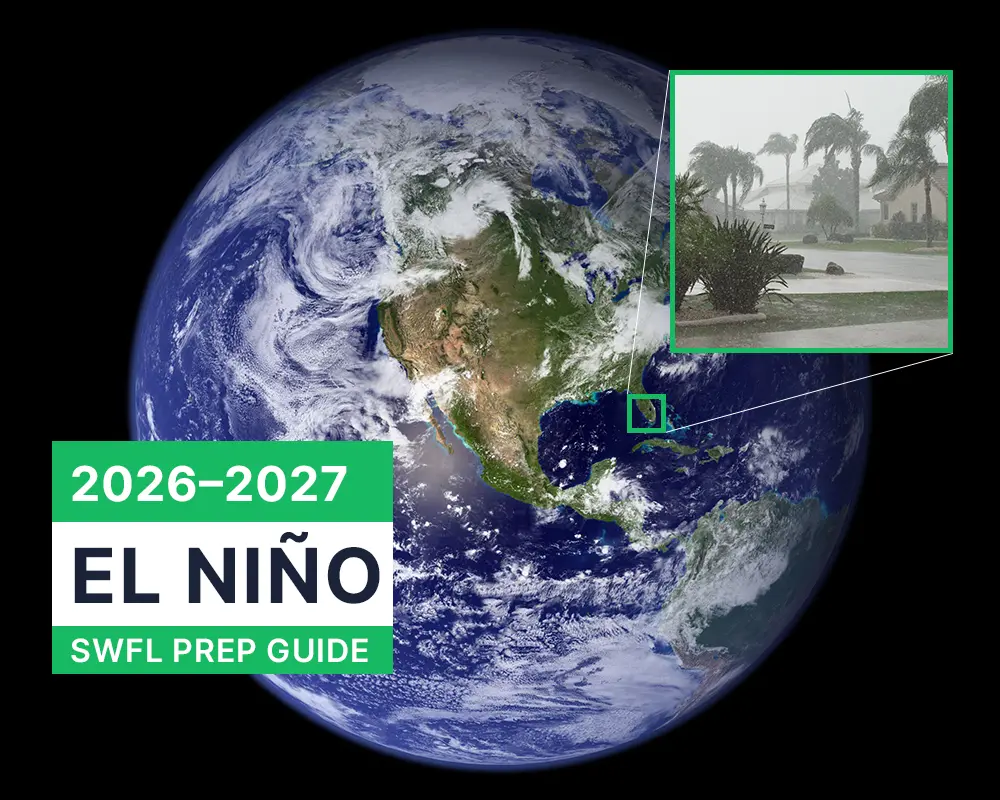
Southwest Florida property owners are accustomed to preparing for severe weather during hurricane season. We clear drains, secure outdoor furniture, check boats and keep a close eye on the tropics from June through November. Once hurricane season winds down, however, winter is usually considered the easier part of the year. The 2026–2027 winter may be an exception.
El Niño conditions can significantly change winter weather patterns across Florida, bringing more frequent storm systems, above-average rainfall and a greater potential for severe thunderstorms. While El Niño can actually help suppress Atlantic hurricane activity, the same global weather pattern is associated with a wetter and stormier winter across the southern United States.
For homeowners in Naples, Marco Island, Bonita Springs, Estero, Fort Myers, Cape Coral and other parts of Southwest Florida, this is a good reason to extend storm preparation beyond hurricane season. Waterfront properties deserve particular attention because heavy rain, wind, changing tides and moving sediment can affect everything from drainage and landscaping to docks, boat lifts and canal access.
At Overall Outdoor & Marine Services, we work with both the outdoor and waterfront sides of Southwest Florida properties. Here is what homeowners should know about El Niño and what can be done now to prepare for the conditions it may bring.
TL;DR: What El Niño Could Mean for Southwest Florida
El Niño develops when surface waters in portions of the equatorial Pacific Ocean become unusually warm. That temperature anomaly can alter atmospheric circulation around the world, including the position and strength of the jet stream over North America.
For Southwest Florida, an El Niño winter generally increases the likelihood of wetter and stormier conditions. Property owners should prepare for:
- More frequent periods of rainfall during the traditional dry season
- Strong thunderstorms and gusty winds
- An increased potential for severe weather, including tornadoes
- Standing water and drainage problems becoming more noticeable
- Additional wear on patios, landscaping and other outdoor areas
- Changing water conditions around docks, seawalls and boat lifts
- Sediment movement and accumulation in canals and around waterfront access points
Preparing for these conditions is less about boarding up the house for one major storm and more about making sure the property can handle repeated periods of wet and windy weather throughout the winter.
What Is El Niño?
El Niño is a naturally occurring climate pattern associated with warmer-than-normal ocean surface temperatures across portions of the central and eastern equatorial Pacific. Although the Pacific Ocean may seem far removed from Southwest Florida, changes in ocean temperatures on that scale can influence atmospheric circulation across much of the planet.
One of the most important effects during an El Niño winter is a change in the jet stream. The subtropical jet stream typically becomes stronger and more active across the southern United States, creating a more favorable path for storm systems to travel across the Gulf Coast and Florida.
That shift is why El Niño can produce seemingly contradictory effects for Florida. During Atlantic hurricane season, increased wind shear can make conditions less favorable for tropical systems to organize and strengthen. During winter, however, the active southern storm track can bring Florida more rain, thunderstorms and severe weather.
How Could El Niño Affect Southwest Florida During Winter 2026–2027?
Southwest Florida’s winter dry season is one of the reasons so many people want to be here from November through April. Lower humidity, less frequent rain and comfortable temperatures allow homeowners to spend considerably more time outside. An El Niño winter can disrupt that normal pattern.
Instead of long stretches of consistently dry weather, Southwest Florida may experience more frequent storm systems moving across the Gulf of Mexico. These systems can produce widespread rainfall, strong winds and thunderstorms even when there is no tropical system anywhere near Florida.
Severe weather is another concern. El Niño winters have historically been associated with an elevated severe-weather risk across Florida because the atmospheric setup can combine warm, humid surface air with stronger winds higher in the atmosphere. When the right ingredients come together, thunderstorms can become severe and potentially produce damaging winds or tornadoes.
No seasonal forecast can tell us exactly how many storms Southwest Florida will receive or whether a particular property will experience severe weather. El Niño simply changes the broader weather pattern and increases the likelihood of certain conditions. For property owners, that makes preventative maintenance especially important.
Make Sure Your Property Has Proper Drainage
Drainage should be near the top of the preparation list for any Southwest Florida property. Our sandy soil can move water quickly in some areas, but development, hardscaping, landscaping and changes in elevation can create places where water becomes trapped instead of draining away from structures.
Drainage problems are also easy to overlook during the dry season. A low area beside the pool deck may seem harmless when it rains once every couple of weeks. The same area can become a significant problem when several storm systems bring repeated rainfall over a short period.
After a heavy rain, walk the property and look at where water is actually going. Pay particular attention to the foundation, pool deck, patio, driveway and landscaped areas. Standing water that remains long after surrounding areas have drained can indicate that the existing system is clogged, undersized or simply not designed correctly for the property.
Common warning signs include:
- Water collecting against the home or other structures
- Standing water around pool decks and patios
- Landscape beds washing out after heavy rain
- Soil or mulch repeatedly moving into walkways
- Pavers settling or becoming uneven
- Catch basins that remain full after a storm
- Water flowing toward the house instead of away from it
Depending on the property, the solution could involve cleaning existing drains, correcting grading or installing systems such as catch basins, channel drains or French drains. The right solution depends on where the water originates and where it can safely be redirected.
The important thing is to address the problem before repeated winter rainfall puts the drainage system to the test.
Prepare Patios, Pavers, and Outdoor Living Areas
Outdoor living is part of everyday life in Southwest Florida, particularly during winter. Patios, pool decks, outdoor kitchens, pergolas and landscaped areas often function as extensions of the home, which also means they are constantly exposed to the elements.
Before the wetter winter pattern becomes established, inspect these areas for existing problems. Loose or uneven pavers, erosion around patio edges, damaged drains and areas that already collect water can all become worse after repeated storms. Water moving beneath hardscaped surfaces can gradually wash away supporting material, causing settling that may eventually require more extensive repairs.
Outdoor kitchens and permanently installed features should also be checked for signs of deterioration or areas where water can enter. Cabinets, electrical components, appliances and other equipment designed for outdoor use are built to tolerate exposure, but that does not mean maintenance should be ignored.
A good inspection before winter provides an opportunity to correct smaller problems while they are still manageable.
Secure Outdoor Furniture and Loose Items
Hurricane-force winds are not required to turn outdoor furniture into a hazard. A strong winter thunderstorm can produce damaging wind gusts with relatively little warning, particularly when a fast-moving front crosses Southwest Florida.
Patio furniture, umbrellas, lightweight planters, grills, pool accessories and decorations should have a designated place where they can be secured when severe weather is expected. Larger items that cannot easily be moved should be properly anchored when appropriate.
This becomes especially important on waterfront properties. An unsecured chair or umbrella that enters a canal can damage a boat, dock or neighboring property. Having a simple plan for securing these items makes it much easier to prepare when severe weather is forecast instead of trying to figure everything out at the last minute.
Waterfront Property Owners Have More to Consider
Waterfront homes face many of the same weather concerns as inland properties, but they also have marine infrastructure constantly exposed to saltwater, tides, waves and moving sediment. An active winter weather pattern can place additional stress on structures that may already have years of exposure to Southwest Florida’s marine environment.
Docks, seawalls and boat lifts should therefore be included in the same preventative maintenance routine as the rest of the property.
Inspect Your Boat Lift Before Stormy Weather
A boat lift protects one of the most valuable assets on many waterfront properties, yet it often receives attention only after something stops working. Preventative inspection is particularly important before a period of potentially stormy weather.
Check the visible condition of cables, pulleys, motors, switches, bunks and structural components. Look for corrosion, fraying cables, deteriorated hardware or anything that appears to be moving differently than it should. The lift should raise and lower smoothly, and the boat should remain properly supported and level throughout its operation.
Any unusual noise, hesitation, uneven movement or visible deterioration deserves attention. Catching a worn component during an inspection is considerably easier than dealing with a lift failure while a boat is sitting on it.
Inspect Your Dock and Decking
A dock experiences constant exposure to sunlight, moisture, saltwater and movement. Even a well-built dock will eventually require maintenance, and stormy conditions can accelerate problems that have already begun developing.
Walk the entire dock and check for loose decking, damaged boards, deteriorating fasteners and sections that feel unstable or move excessively underfoot. Railings, ladders, cleats and other attached components should also be secure.
Small repairs made early can prevent additional deterioration and help keep the dock safe throughout the winter boating season.
Look for Signs of Seawall or Shoreline Problems
Seawalls protect waterfront properties from erosion and help retain the soil supporting the land behind them. Because much of the structure is at or below the waterline, developing problems are not always immediately obvious.
Homeowners should watch for cracking, movement, erosion or soil loss near the seawall. Depressions developing behind the wall, unusual settling or areas where soil appears to be washing away can indicate that water is moving where it should not.
Heavy rainfall combined with fluctuating canal or tidal levels can put additional pressure on these systems. If something appears to have changed, it is better to have the area evaluated than to assume it is normal. For more tips on how to inspect and maintain your seawall, read our dedicated blog post here.
Storms Can Change Water Depth Around Your Dock
Rain and wind are not the only concerns during an active winter weather pattern. Storms can also move sediment through Southwest Florida’s canals and waterways.
Strong currents, changing tides and runoff can transport sand, silt and organic material. When that material reaches slower-moving sections of a canal, some of it settles to the bottom. Over time, sediment accumulation can reduce the usable water depth around docks and boat access areas.
Waterfront homeowners may begin noticing that their boat sits closer to the bottom during low tide, that certain sections are becoming difficult to navigate or that an area that previously provided sufficient clearance has become noticeably shallower.
When Dredging May Become Necessary
Dredging removes accumulated material from the bottom and can restore usable depth where sediment has begun interfering with waterfront access.
Not every shallow area automatically requires dredging, and marine work can involve permitting and other site-specific considerations. However, changes in depth should not be ignored, particularly after an unusually stormy season.
If your boat begins having difficulty accessing a dock at tides that were previously manageable, an evaluation can help determine what has changed and whether dredging is an appropriate solution.
Keep Exterior Surfaces Clean and Maintained
Property preparation should also include routine exterior cleaning. A wetter winter means patios, pool decks, screen enclosures, driveways and other outdoor surfaces will spend more time exposed to moisture. Existing organic buildup can become more noticeable, while debris can interfere with drainage and make wet surfaces more slippery.
Professional exterior cleaning can also make it easier to identify underlying problems. Dirt and organic buildup can hide cracks, deteriorated joints and other surface issues that may deserve attention before repeated rainfall begins.
For homeowners who want to prepare the exterior of their property before winter, Happy Home Detailing provides professional exterior cleaning services throughout Southwest Florida, including pressure washing, soft washing, gutter cleaning, window cleaning and cleaning for pool decks, lanais, screens and cages.
A clean property is not a substitute for proper drainage or structural maintenance, but it is an important part of keeping outdoor areas functional and identifying problems before they get worse.
El Niño Preparation Is Different from Hurricane Preparation
Hurricane preparation usually revolves around a specific event. A storm develops, forecasts become more certain and homeowners have several days to secure their properties.
Preparing for an El Niño winter is different because the concern is cumulative. Instead of one major event, Southwest Florida may experience repeated periods of rainfall, wind and thunderstorms over several months. That can expose weaknesses that would not necessarily become apparent during a single afternoon storm.
A partially clogged drain may handle the first rainfall but struggle after the ground becomes saturated. A loose section of decking may survive normal conditions but continue deteriorating after repeated exposure. Sediment around a dock may accumulate gradually until boat access becomes noticeably different.
Preventative maintenance is about finding those vulnerabilities before months of active weather have the opportunity to make them worse.
Prepare Your Southwest Florida Property With Overall Outdoor & Marine Services
Overall Outdoor & Marine Services works with Southwest Florida property owners both on land and on the water. Our outdoor services include drainage, landscaping, hardscaping and outdoor living improvements, while our marine team handles docks, seawalls, boat lifts, dredging and other waterfront projects.
That combination is particularly valuable for waterfront properties because storm preparation does not stop at the seawall. The way water moves through the yard, around hardscaped areas and into the surrounding waterfront environment can affect multiple parts of the property.
With El Niño influencing the 2026–2027 winter weather pattern, now is a good time to inspect the systems and structures that protect your property. Addressing drainage problems, deteriorating outdoor areas, dock or boat lift maintenance and changing water depth before the stormiest part of winter can help prevent smaller issues from turning into larger and more expensive repairs.
If you are concerned about how your property will handle a wetter Southwest Florida winter, contact Overall Outdoor & Marine Services to schedule an evaluation and make sure your outdoor and waterfront spaces are prepared for the season ahead.