
“A single inch of rain falling on a typical residential roof can generate well over 1,000 gallons of runoff.”
Now imagine one of those familiar Southwest Florida afternoons when the sky opens up for thirty minutes and dumps three or four inches before the sun comes back out like nothing ever happened. That isn’t unusual around here. It’s summer.
The question isn’t whether your property is going to receive a tremendous amount of water over the next few months. It will. The real question is whether that water has somewhere to go.
We’ve walked properties throughout Naples, Bonita Springs, Estero, Fort Myers, Cape Coral, Marco Island, and Punta Gorda where homeowners invested heavily in beautiful landscaping, custom paver driveways, outdoor kitchens, pool decks, retaining walls, and landscape lighting, only to watch those investments slowly deteriorate because rainwater wasn’t being managed properly. In many cases, nothing was actually “broken.” The yard simply wasn’t directing water where it needed to go.
Drainage is one of those things nobody gets excited about until there’s a problem. It isn’t as flashy as a new patio or an outdoor kitchen, but it quietly protects everything else you’ve invested in. When it’s done correctly, you hardly notice it. When it isn’t, every summer storm becomes something you worry about.
As contractors, we’ve learned that most drainage issues don’t begin during a hurricane. They begin months or even years earlier with ordinary afternoon thunderstorms. Water starts collecting in one corner of the yard. A flower bed stays soggy for days. Mulch begins washing into the lawn. The edge of a pool deck never seems to dry. Maybe you notice standing water along the side of the house after every rain. Individually, those problems don’t seem like emergencies. Together, they’re telling you your property isn’t moving water efficiently.
The good news is that drainage problems are usually very fixable when they’re addressed early. Waiting until hurricane season exposes them is when they become much more expensive.
Southwest Florida Is Tough on Properties
Living in Southwest Florida comes with a lot of advantages. Beautiful weather, boating, beaches, and outdoor living are why so many people call this place home. The downside is that Mother Nature tests every property year after year.
Our rainy season isn’t gentle. Summer storms regularly dump inches of rain in a very short period of time, and because much of Southwest Florida is relatively flat, that water doesn’t naturally run away as quickly as it would in hillier parts of the country. Add in high water tables, coastal conditions, compacted soils from construction, and hurricane season, and you have the perfect recipe for drainage problems if your property wasn’t designed correctly.
We’ve seen homeowners assume their yard just “holds water.” In reality, many properties simply need a better plan for moving it.
Think about what happens during a heavy rainstorm. Water lands on your roof, driveway, sidewalks, pool deck, patios, landscaping, and lawn all at the same time. Every hard surface sheds water almost immediately. If there’s no system in place to collect and redirect it, that runoff simply follows gravity until it reaches the lowest point on your property. Unfortunately, the lowest point is often exactly where you don’t want thousands of gallons of water sitting.
That could be against your home’s foundation. It could be underneath expensive pavers. It might be your landscape beds or around your pool equipment. We’ve even seen water work its way into garages because the surrounding grading allowed runoff to flow toward the house instead of away from it.
Water Doesn’t Need a Huge Opening to Cause Big Problems
One thing homeowners often underestimate is just how persistent water can be.
It doesn’t have to flood your yard by several inches to create damage. Repeated exposure over months and years is often what causes the biggest headaches. Soil becomes saturated, decorative stone begins migrating, mulch washes away after every storm, grass struggles to survive in constantly wet areas, and roots begin suffocating because they never have an opportunity to dry out properly.
Plants need water, but they also need oxygen. When roots stay submerged for extended periods, even healthy landscaping can begin declining. Homeowners often assume they have a plant problem when they actually have a drainage problem.
The same concept applies to hardscapes. Standing water doesn’t just look bad. It creates ideal conditions for algae, mildew, staining, erosion around paver edges, and accelerated wear. If you’ve ever noticed a section of your pool deck that always seems slippery or never fully dries after rain, there’s usually a reason.
Those aren’t just cosmetic concerns. They’re early warning signs.
Your Foundation Wants Water Far Away
When people think about protecting their home during storm season, they usually focus on the roof. That’s important, but what happens at ground level deserves just as much attention.
The area immediately surrounding your home’s foundation should never become a place where water consistently collects. Every storm that leaves water sitting against the foundation introduces more moisture into the surrounding soil. Over time, repeated saturation and drying cycles can contribute to settlement issues, soil movement, and unnecessary stress on the structure.
That’s why one of the first things we evaluate on any drainage project is how water behaves around the house itself.
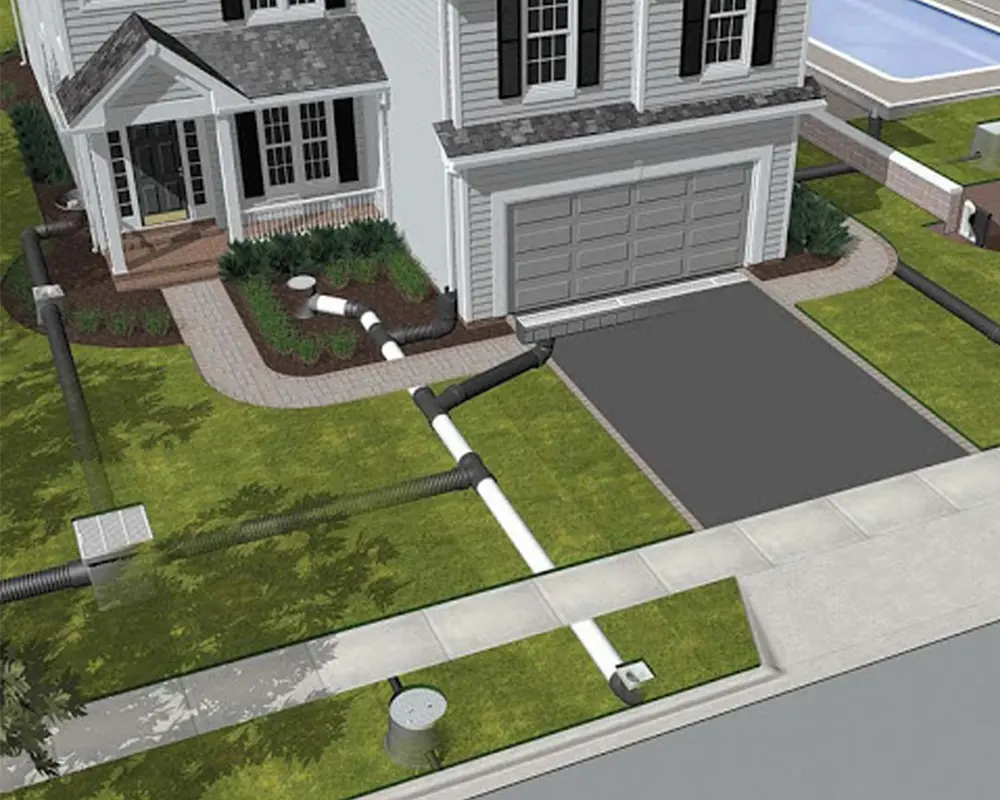
Ideally, rainwater should begin moving away from the foundation almost immediately after it reaches the ground. Sometimes that simply requires correcting the grade around the home. Other times it requires catch basins, French drains, or underground drainage piping to intercept runoff before it has a chance to pool.
Every property is different, which is exactly why there isn’t a one-size-fits-all solution.
Pool Decks Shouldn’t Become Ponds
One of the biggest investments many Southwest Florida homeowners make is their outdoor living space. Pools, lanais, travertine, pavers, outdoor kitchens, fire features, and seating areas are designed to be enjoyed almost year-round.
Unfortunately, poor drainage can make those spaces frustrating to use.
We’ve visited homes where standing water remained on portions of a pool deck long after the storm passed. Besides being inconvenient, that moisture encourages algae growth, creates slippery walking conditions, and leaves dirt and debris behind as it evaporates. It also increases maintenance because homeowners find themselves pressure washing surfaces more often than they should have to.
Good drainage starts before the first paver is ever installed. Water should naturally flow toward collection points instead of settling on finished surfaces. If an existing patio wasn’t built with proper drainage in mind, there are often ways to retrofit solutions that dramatically improve how water moves across the space.
It’s much easier to redirect water than it is to constantly fight the effects of standing water year after year.
Protecting Your Landscaping Means Protecting Your Investment
Beautiful landscaping doesn’t happen overnight. Whether you’ve installed mature palms, specimen trees, flowering shrubs, landscape lighting, decorative rock, or premium mulch, you’ve made a significant investment in your property.
Heavy rain can undo a surprising amount of that work.
We’ve all seen mulch floating into the street after a storm. Landscape edging becomes exposed, soil washes away from plant roots, decorative gravel ends up scattered across sidewalks, and fresh sod develops erosion channels where water repeatedly cuts through the lawn.
None of that happens because the plants were poor choices.
It happens because water wasn’t given a better path to follow.
When we design drainage systems, we’re thinking about much more than getting rid of puddles. We’re thinking about protecting everything surrounding those puddles. Every gallon of water that gets safely collected and redirected is a gallon that isn’t washing away your landscaping or undermining your hardscape investment.
Good Drainage Doesn’t Mean Water Disappears
One of the biggest misconceptions we hear is, “I just want the water to soak into the ground.”
That isn’t always realistic in Southwest Florida.
During the peak of rainy season, the ground eventually reaches a point where it simply can’t absorb water fast enough. Once the soil becomes saturated, every additional gallon has to travel somewhere else.
That’s exactly what a properly designed drainage system is built to do.
Instead of hoping the ground absorbs everything, drainage systems intentionally collect runoff and move it toward designated discharge areas where it can safely exit your property without creating damage along the way.
Think of it like traffic. Without roads, cars would eventually end up driving through front yards. Water works the same way. If you don’t provide a clear path, it’ll make one itself, and it usually isn’t the path you’d choose.
Understanding the Different Types of Drainage Systems
Every property is different, which means every drainage solution should be tailored to the way water naturally moves across the land. A yard with a gentle slope has different needs than a flat waterfront property, and a home surrounded by mature landscaping requires a different approach than new construction. That’s why we don’t believe in installing the same system everywhere. Instead, we evaluate where the water is coming from, where it’s collecting, and where it can be safely discharged.
Here are some of the most common drainage solutions we install throughout Southwest Florida.
French Drains
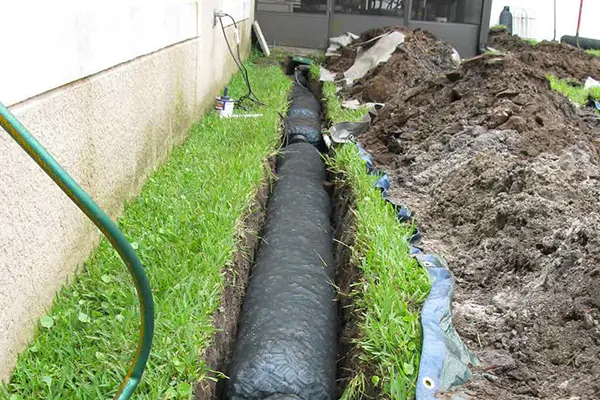
Despite the name, a French drain isn’t an open ditch. It’s an underground drainage system designed to intercept groundwater before it reaches areas where it can create problems.
A perforated pipe is installed below grade and surrounded with clean stone. Water naturally seeps into the stone, enters the pipe through the perforations, and is carried away to a designated discharge location.
French drains work exceptionally well in areas that remain consistently wet, around landscape beds, alongside foundations, or anywhere groundwater tends to linger after storms.
If you constantly notice soggy grass that never seems to dry, even several days after rainfall, a French drain is often one of the best long-term solutions.
Catch Basins
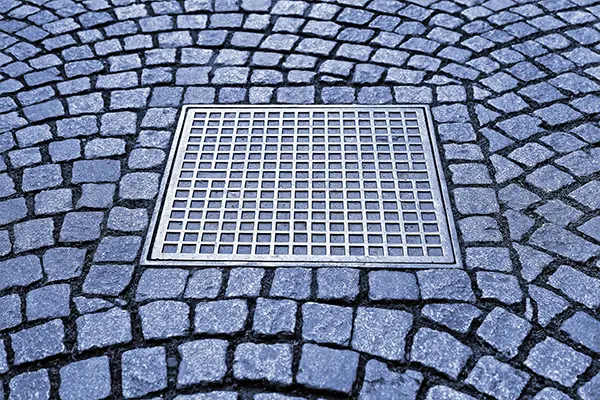
Sometimes the issue isn’t groundwater. It’s surface water.
Catch basins are designed to collect large amounts of runoff before it has a chance to spread across your property. These systems are commonly installed in low areas where water naturally pools, near driveways, around pool decks, at the bottom of sloped yards, or adjacent to patios.
Water enters through a grated opening and flows into underground piping that carries it safely away from your home.
If you’ve ever looked outside during a storm and watched water collect in one particular corner of the yard every single time, there’s a good chance that location would benefit from a catch basin.
Channel Drains
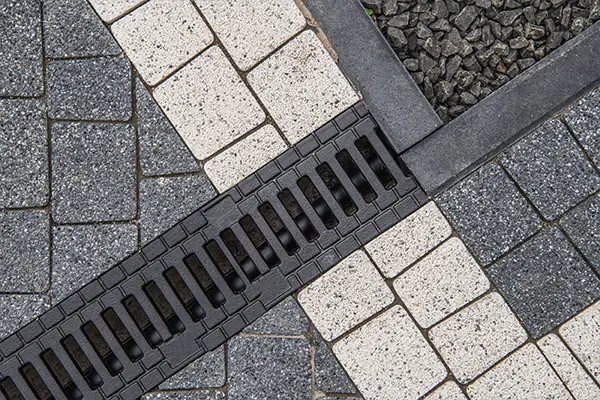
Channel drains, sometimes called trench drains, are long, narrow drains commonly installed across hard surfaces.
They’re especially popular around pool decks, garage entrances, driveways, lanais, outdoor kitchens, and large patios where significant amounts of water need to be intercepted before they reach structures or create standing water.
Instead of allowing water to continue flowing across the surface, the drain captures it immediately and directs it into underground drainage piping.
For homeowners who have invested heavily in outdoor living spaces, channel drains often become one of the most effective ways to keep those areas dry and usable after heavy rains.
Downspout Extensions
Your roof collects an incredible amount of rainwater during a summer storm.
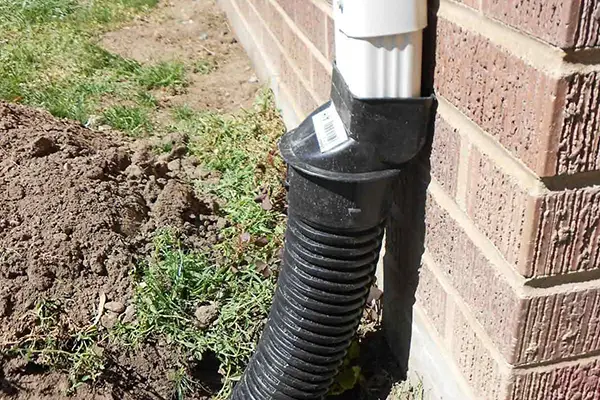
Without proper management, every gallon discharged from your gutters lands immediately next to your home’s foundation.
Sometimes the solution is surprisingly straightforward. Underground downspout extensions connect directly to your gutter system and transport roof runoff well away from the house before it ever has an opportunity to collect around the foundation or landscape beds.
Many homeowners don’t realize how much water their roof alone contributes to drainage problems until those downspouts are redirected.
Yard Grading
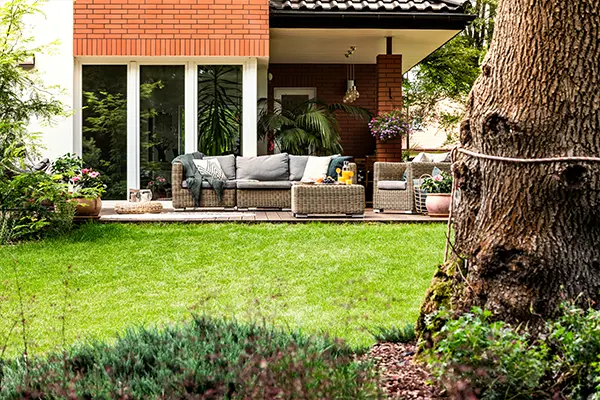
Sometimes the best drainage solution isn’t adding a drain at all.
We’ve seen countless properties where water issues could be dramatically improved simply by correcting the grade of the yard.
Water always follows gravity. If the soil naturally slopes toward your house, no drainage system will ever perform as well as it should until that slope is corrected. Proper grading encourages water to move away from structures before it ever has a chance to become a problem.
In many cases, grading works hand-in-hand with other drainage systems to produce the best long-term results.
Drainage Is One of the Best Hurricane Preparations You Can Make
Every year, Southwest Florida homeowners prepare for hurricane season by stocking supplies, installing shutters, servicing generators, and reviewing evacuation plans.
Those are all important steps.
One thing that’s often overlooked is preparing the property itself to handle an enormous amount of rainfall.
While no residential drainage system can eliminate flooding from an extreme storm surge or record-breaking rainfall event, a properly designed drainage system can significantly reduce the everyday flooding that occurs during tropical systems and heavy summer storms.
We’ve seen neighborhoods where one yard drains within hours while the neighboring property remains underwater for days. The difference often comes down to planning.
By giving water an intentional path to follow, you’re helping reduce the likelihood of standing water around your foundation, preserving landscaping, protecting hardscapes, and minimizing erosion after severe weather.
Think of drainage as another layer of hurricane preparedness. You hope you’ll never truly need it, but when those storms arrive, you’ll be glad your property was prepared.
Don’t Wait Until Water Finds Its Own Path
One of the biggest mistakes homeowners make is waiting until flooding becomes severe before calling a contractor.
The problem is that water rarely announces itself with one catastrophic event.
Instead, it leaves clues.
Maybe your mulch washes away after every storm.
Maybe there’s a section of lawn that’s always muddy.
Maybe your pool deck stays wet for hours longer than it should.
Maybe water collects against your lanai every afternoon.
Those small problems almost always become larger ones if ignored.
The earlier drainage issues are identified, the easier and more affordable they typically are to correct. Once erosion begins undermining hardscapes or water starts affecting landscaping, repairs often become much more involved than simply installing proper drainage from the start.
Save 10% on Your Drainage Project
Storm season is already here, which makes now the ideal time to prepare your property before the heaviest rains arrive.
For a limited time, Overall Outdoor Services is offering 10% off new residential drainage installation projects throughout Southwest Florida.
Whether your property needs French drains, catch basins, channel drains, grading improvements, or a complete drainage solution, our team can evaluate your property, identify where the water is coming from, and design a system that protects your investment for years to come.
Frequently Asked Questions
If water consistently pools after rain, your lawn stays soggy for several days, mulch washes away, water collects near your foundation, or portions of your driveway or pool deck remain wet long after surrounding areas have dried, your property may benefit from a drainage evaluation.
Yes. One of the primary goals of a drainage system is moving water away from your home’s foundation before it has an opportunity to saturate the surrounding soil. While every property is different, proper drainage is an important part of protecting your home from long-term moisture issues.
French drains are extremely effective in many situations, particularly where groundwater keeps soil saturated. However, every property is unique. Some homes benefit more from catch basins, channel drains, grading improvements, or a combination of systems. A professional site evaluation determines the best solution.
Absolutely. Most drainage projects are retrofits on existing homes. Properly designed systems can often be installed with minimal disruption while dramatically improving how water moves across the property.
No. While drainage plays an important role during tropical storms and hurricanes, most drainage problems actually develop during everyday summer rain events. Correcting those issues helps protect your property year-round.
Protect Your Property Before the Next Storm
Heavy rain is part of living in Southwest Florida, but property damage doesn’t have to be.
A professionally designed drainage system protects far more than your lawn. It helps preserve your landscaping, safeguards your pool deck and hardscapes, directs water away from your home’s foundation, and gives your property a reliable way to handle the intense rainfall our region experiences every year.
If you’re tired of standing water, muddy areas, erosion, or runoff damaging your property, let Overall Outdoor Services develop a drainage solution that’s built specifically for your home.
Contact Overall Outdoor Services today to schedule your drainage consultation and take advantage of our limited-time 10% discount on new drainage installation projects. Prepare your property now, so you’re ready for whatever this storm season brings.